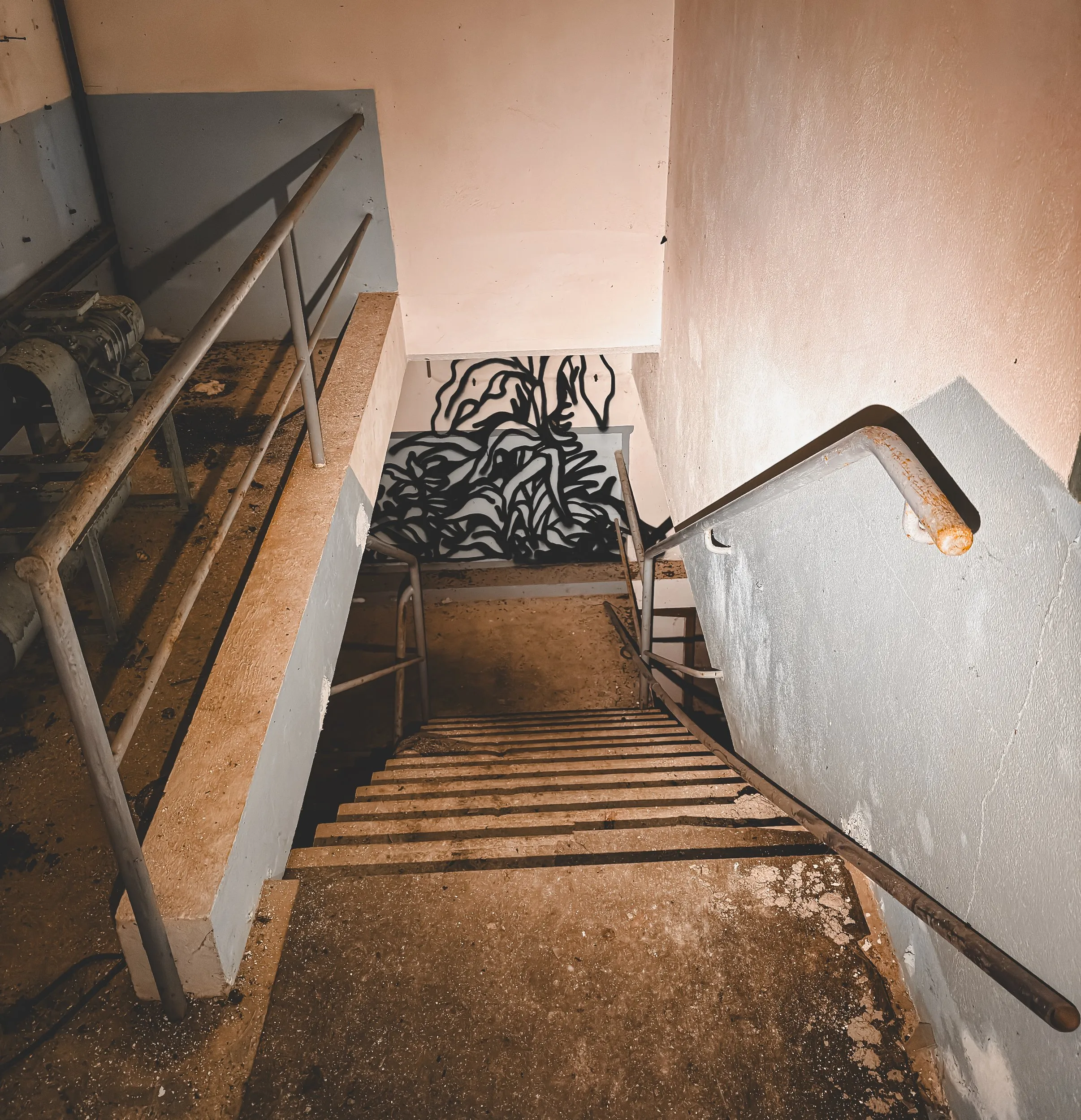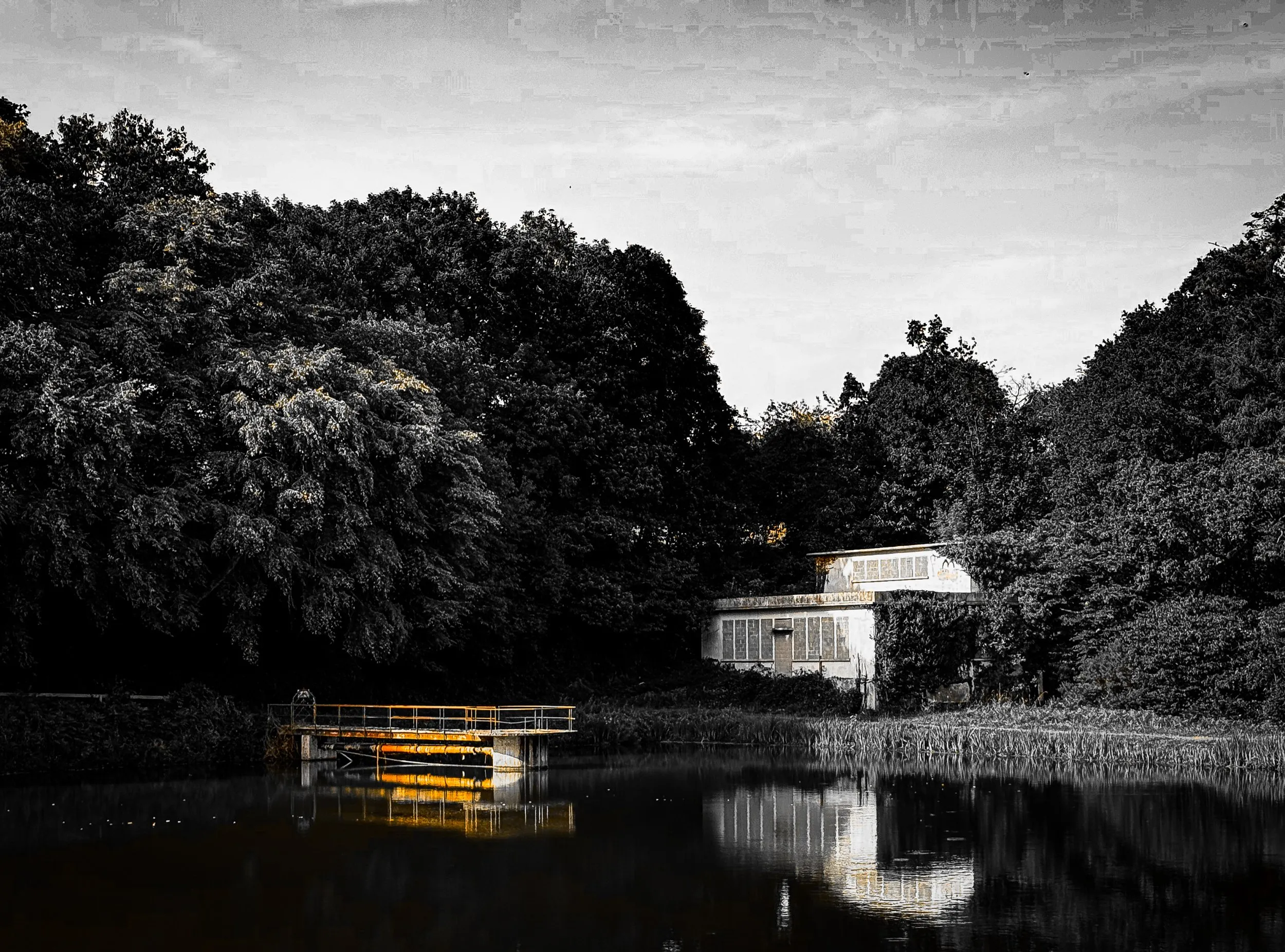
Stylish exterior shot of the pumping station (sorry about the HDR artefacts at the top of the image).
After a short break from urbex following an injury — during which I visited several sites not worth documenting — I finally found this little gem while exploring the French countryside. I hope you find it as interesting as I did.
Monastic Foundations (15th Century)

An AI rendition of the monk Guy Le Lionnays building a dam across the stream — no contemporary images were available.
The Étang de Beaulieu dates back to the 15th century. A monk, Guy Le Lionnays, constructed a dam on the Pont-Quinteux stream, creating a reservoir that likely served the nearby Beaulieu Abbey or the adjacent Manoir de Beaulieu for aquaculture, milling or general water storage. This integrated the pond into the religious and agricultural landscape of Brittany.
Local myths tell of subterranean tunnels linking the abbey to the Manoir de La Burie and of quarries beneath the pond. These were disproved when modern draining revealed only sediment.
The Battle of Saint-Cast (1758)

Painting depicting the Battle of Saint-Cast between the British and the French.
During the Seven Years’ War the Étang de Beaulieu area saw the movement of troops linked to the Battle of Saint-Cast. On 11 September 1758, a British expeditionary force of about 10,000 under General Thomas Bligh was retreating after a failed raid on Saint-Malo; they passed through the pond’s environs and reportedly pillaged the Manoir de Beaulieu and the nearby Château de Galinée. The next day, French forces under the Duke d’Aiguillon (some 8,000–9,000 regulars and militia) defeated the British at Saint-Cast’s Grande Plage. British losses were significant (roughly 745 killed and 1,100 captured); French casualties were about 300 killed or wounded. The victory boosted Breton pride and cemented the pond’s place on a historic retreat route.
Industrial Utility (20th Century) and Current State

A French fisherman with his catch at the reservoir — the waters are rich with fish (approximately six tonnes in this small 3-hectare lake).
In the 20th century the Étang de Beaulieu evolved into a municipal utility, supplying drinking water to Saint-Cast-le-Guildo via a pumping station. Extraction permits dated 1 September 2000 and 4 June 2003 authorised up to 100 m³/h. Water-quality problems followed: agricultural runoff raised nitrate levels and tests detected prohibited pesticides (e.g. atrazine and glyphosate). The pond was classified “non conforme” in the 2011 SAGE Arguenon-Fresnaye report due to organic matter and pesticide contamination.
Regional water management moved to the Syndicat des Fremur, which delegated operations to Veolia Eau 22 from 2013. By 2023 supply standards met Agence Régionale de Santé requirements. The pumping station was decommissioned around 2008; its protective perimeter was abandoned and the building has been disused for over a decade and reportedly sealed (“muré”). Today the site lies derelict, entwined with vines and undergrowth, and the reservoir is popular for fishing and walking, with several fishing pontoons and trails.
The Explore
Having discreetly scouted the location a couple of times under the guise of walking the dogs, I finally negotiated access and struck urbex gold. From outside it looks modest and slightly uninspiring, but the interior is anything but. The site spans three levels: a ground floor that likely housed controls, pumps and monitoring equipment; a basement wet well; and a first floor where, behind locked doors, sensitive equipment such as motors and electrical switchgear was stored. Outside stand a large cone-shaped clarifier and several smaller tanks, plus manual sluice-gate controls.
Images
Below are photographs arranged from exterior features to the first floor, ground floor and finally the wet well. Nearly all interior pictures were taken in pitch darkness with a torch and long exposure — please excuse the poor quality of some images. Happy viewing.
Exterior Features
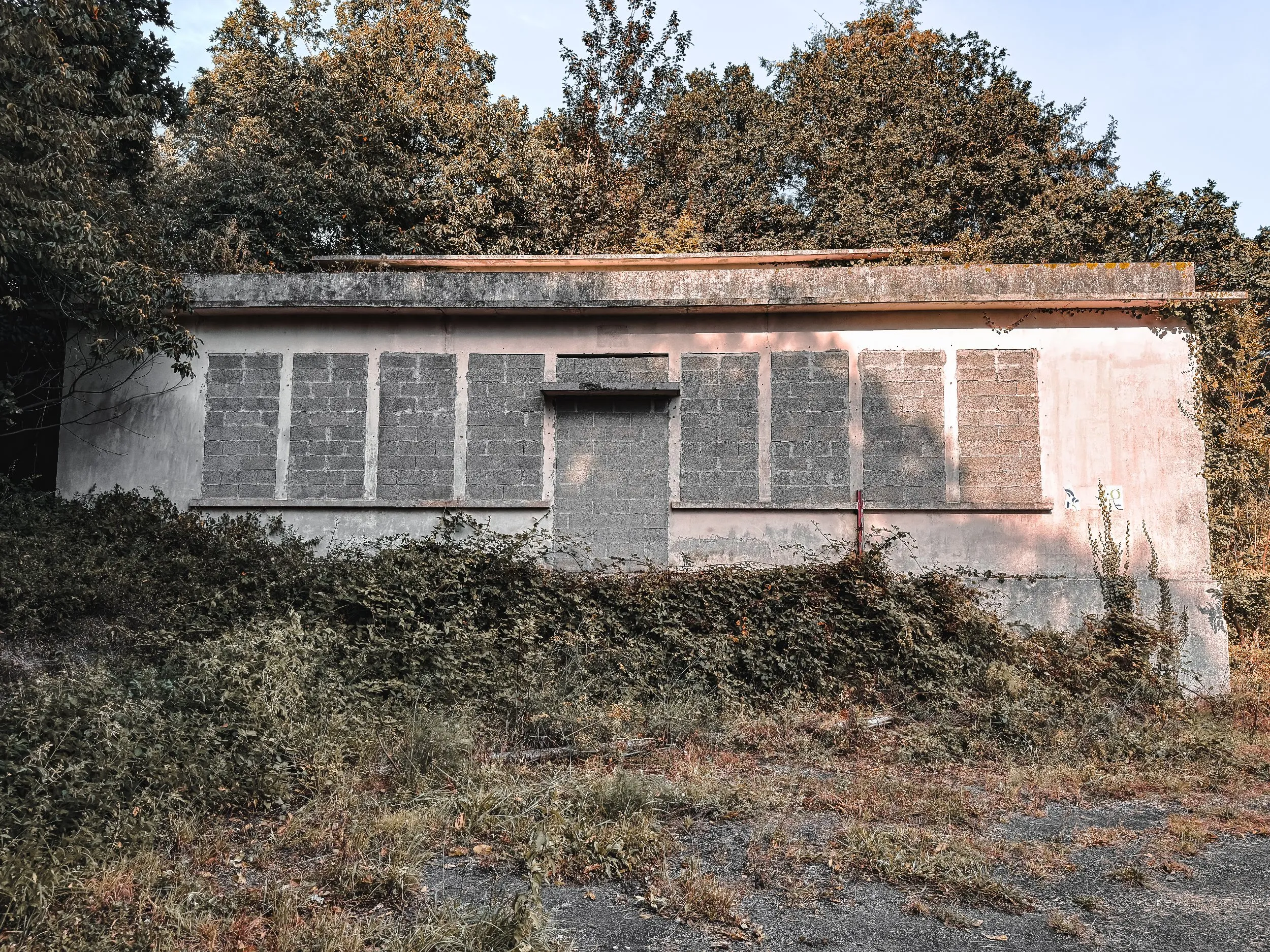
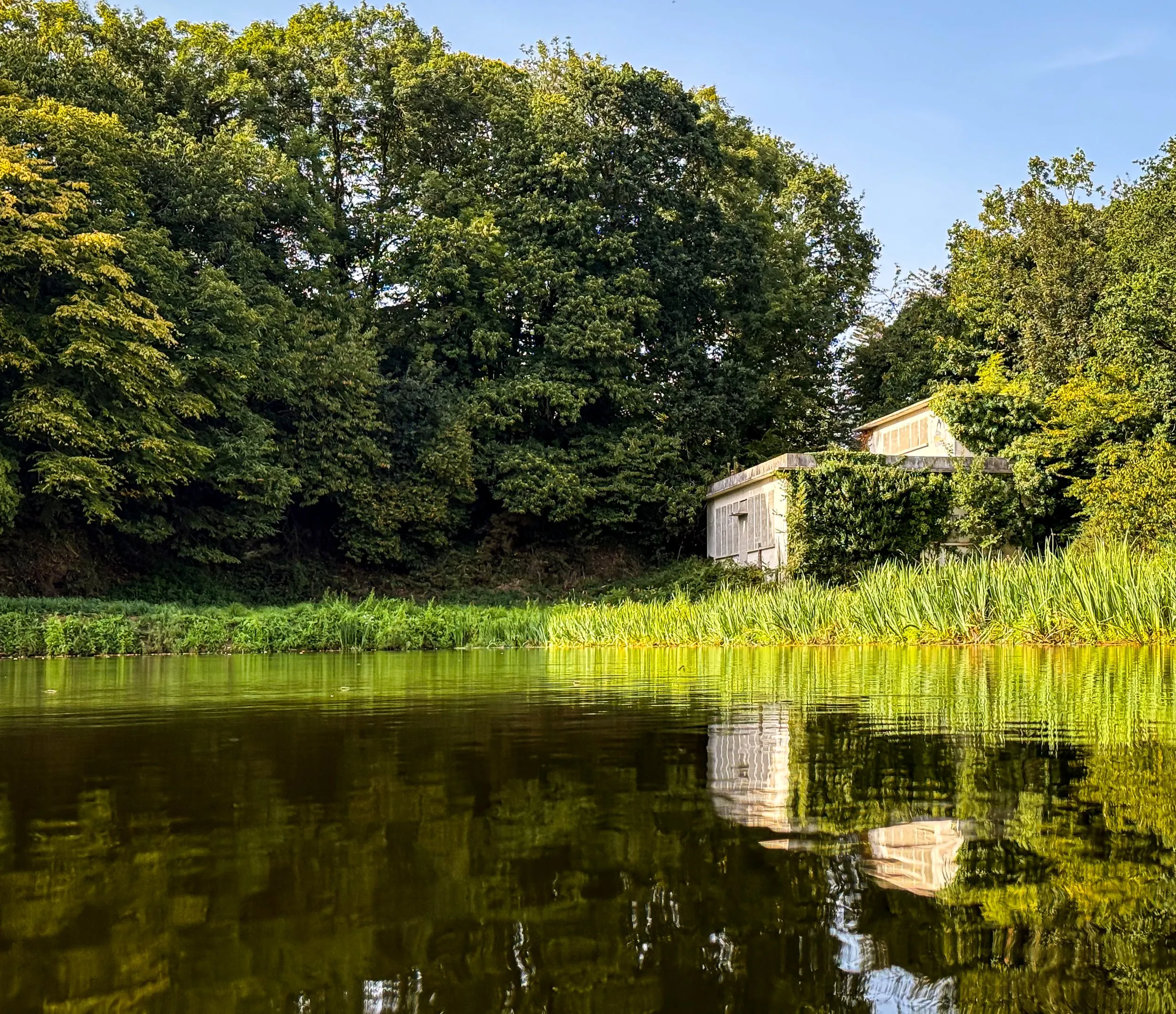
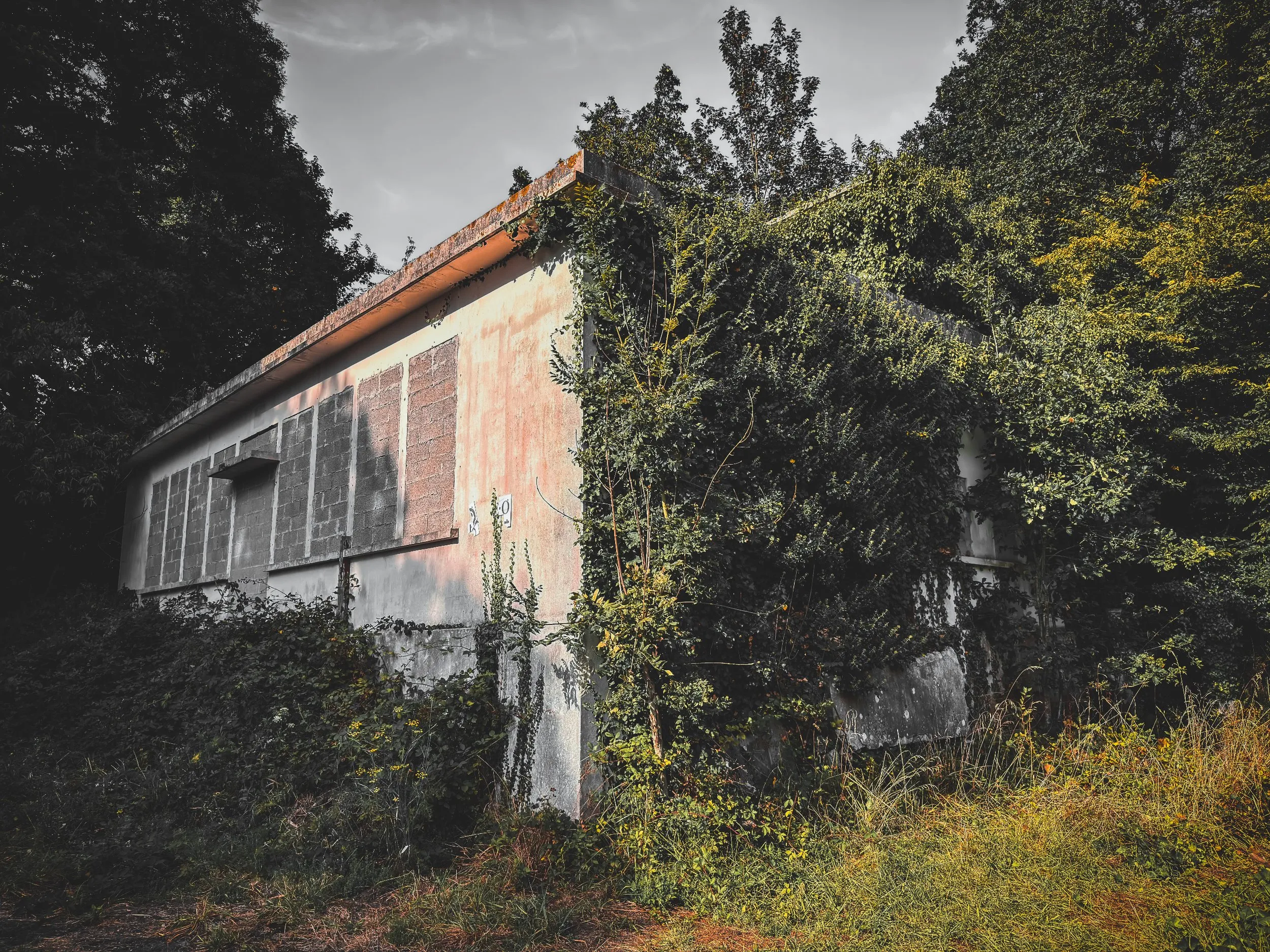
Some exterior shots of the site, completely sealed and reclaimed by nature; the windows and doors have been bricked up with breeze blocks, making the site almost impenetrable.
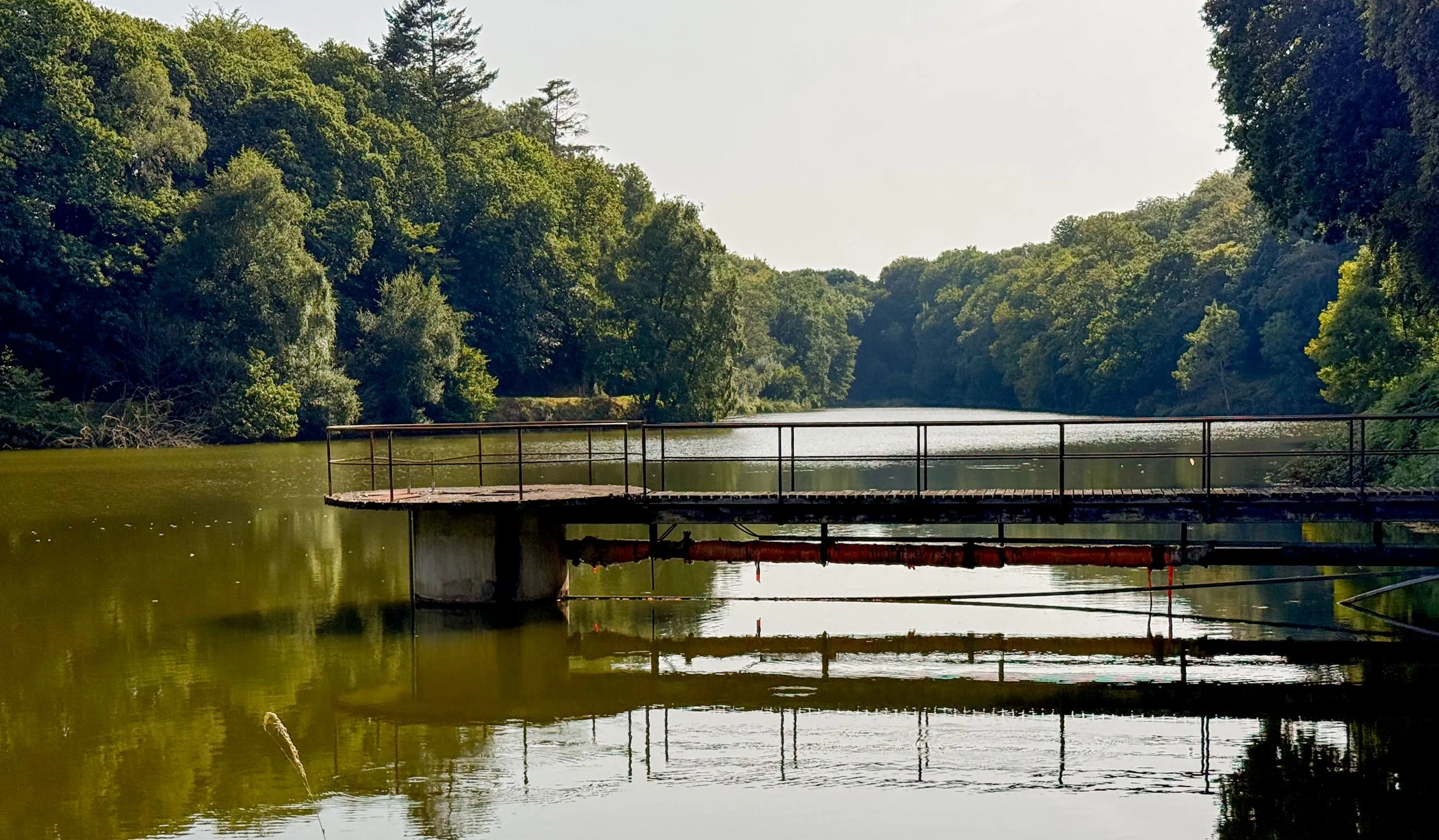
A likely spillway — I couldn’t fully inspect it because the bridge is rotten. In times of high flow the water would overtop the spillway and be diverted downstream.
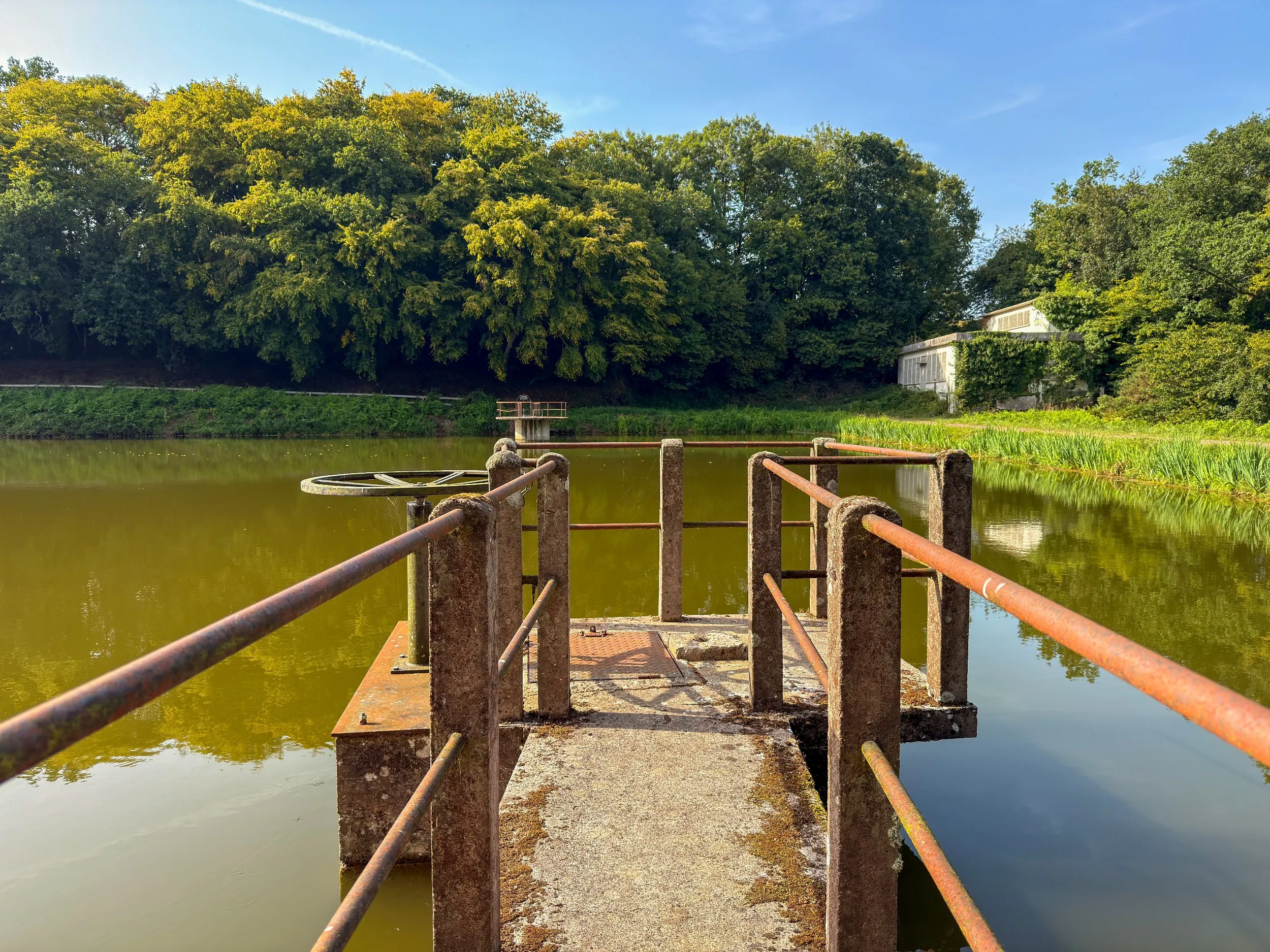
Opposite the spillway is a sluice-gate platform. The large wheel on the left would operate the sluice gates to control reservoir outflow.
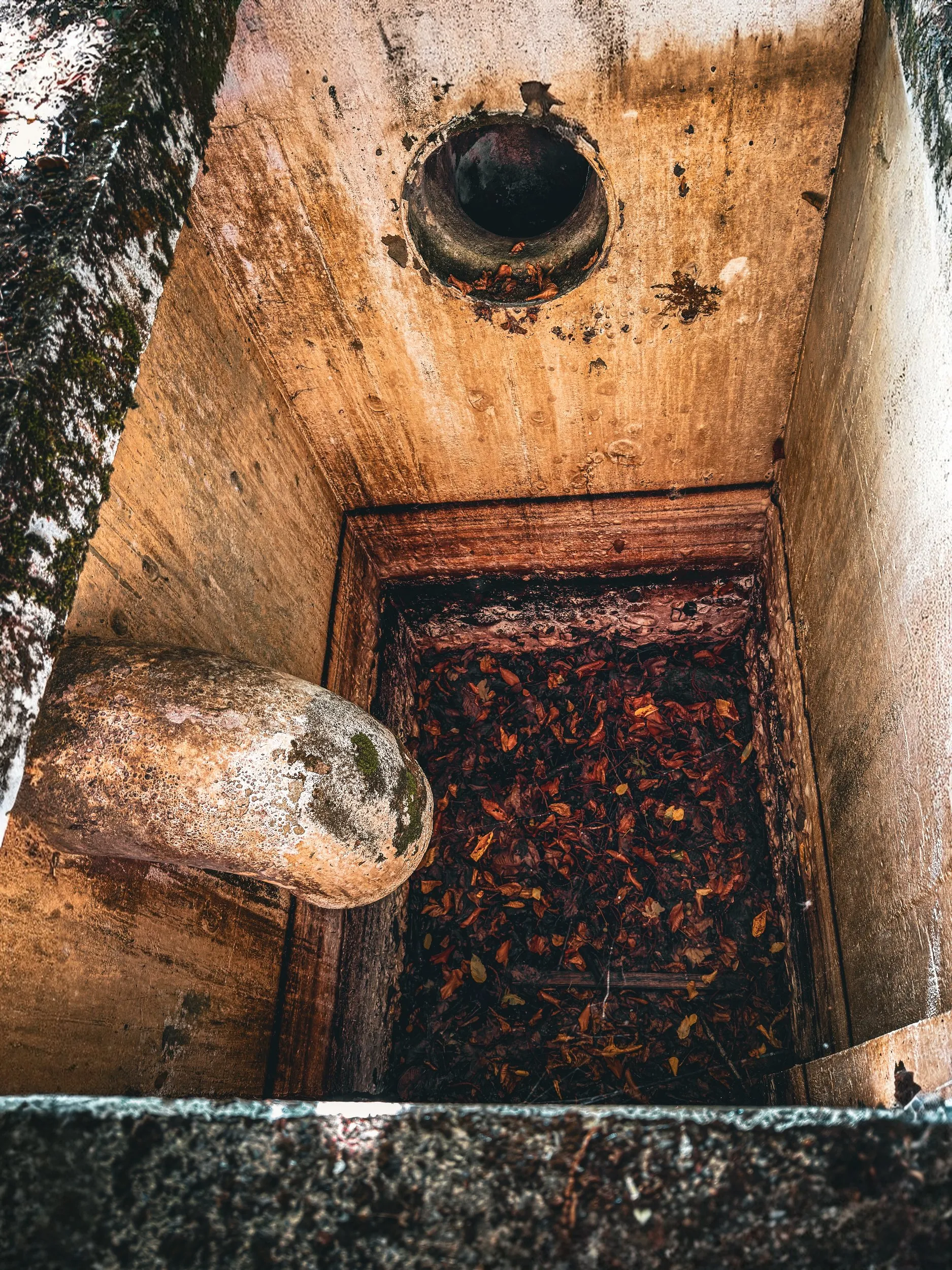
One of several exterior rectangular chambers that I believe are inlet boxes or pre-screening chambers used to remove large debris and act as stilling basins before treatment and pumping.
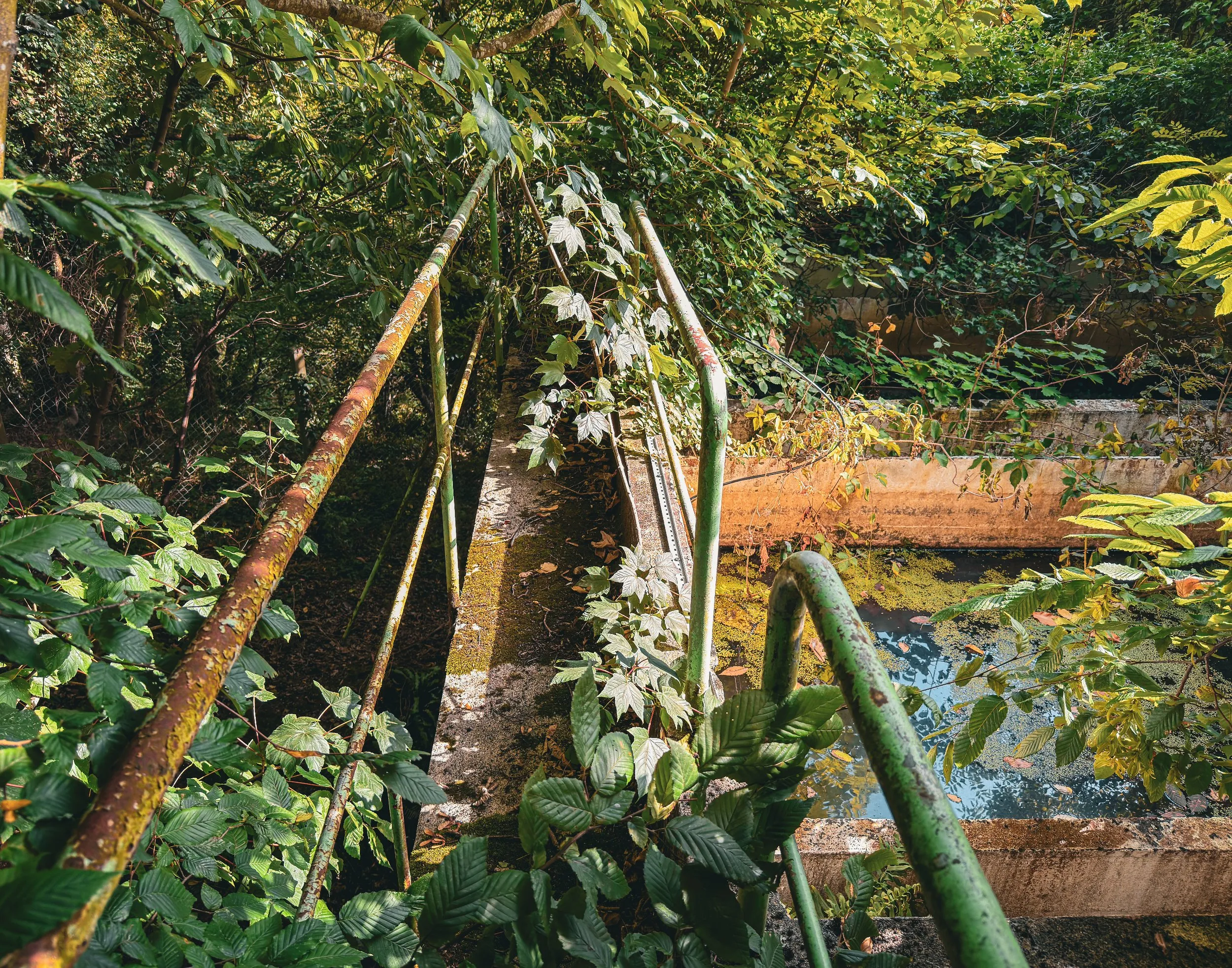
A walkway runs along many of the tanks to allow staff to monitor and maintain them. It is now rusted and the chambers are filled with stagnant water and pondweed.
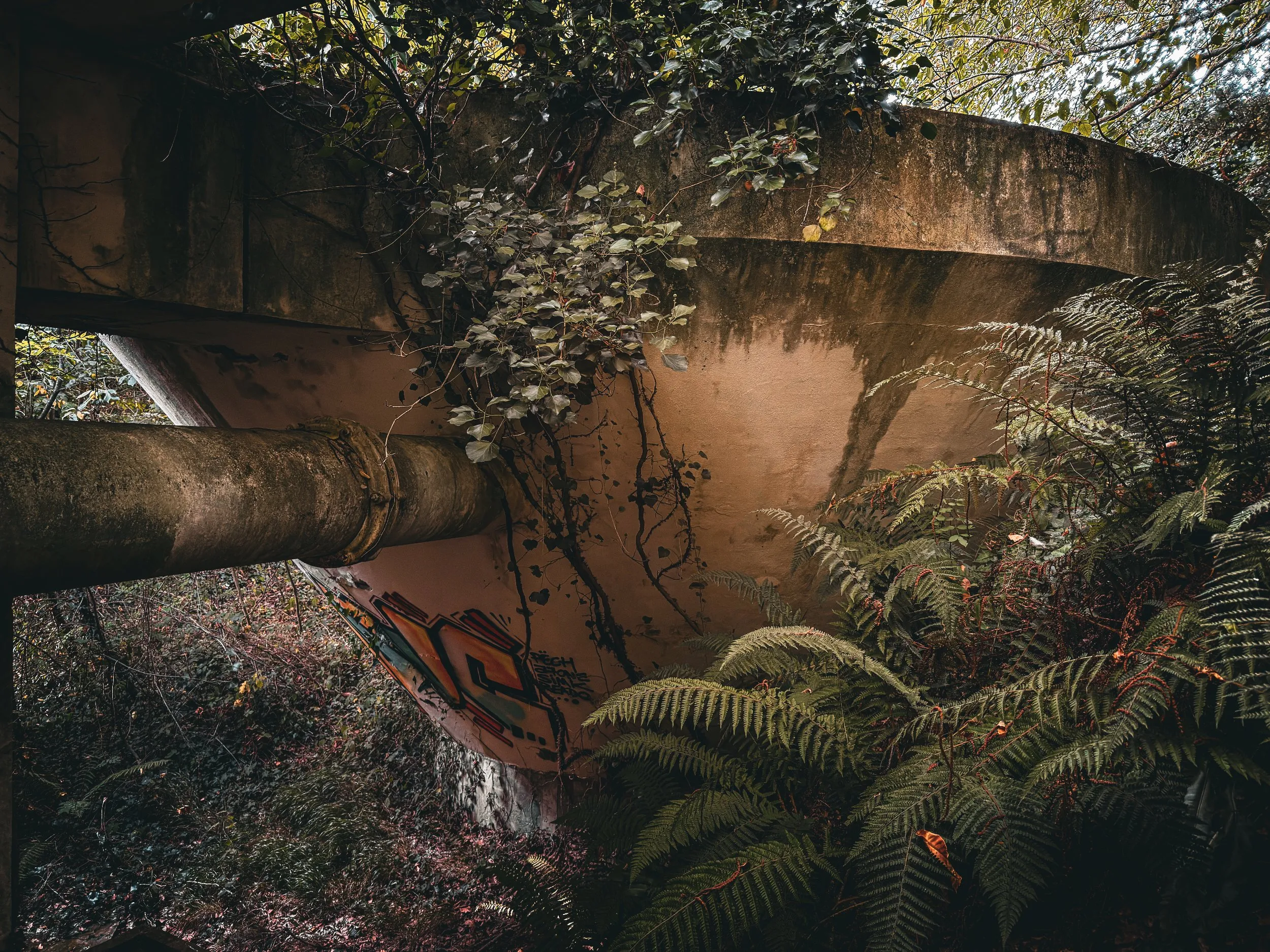
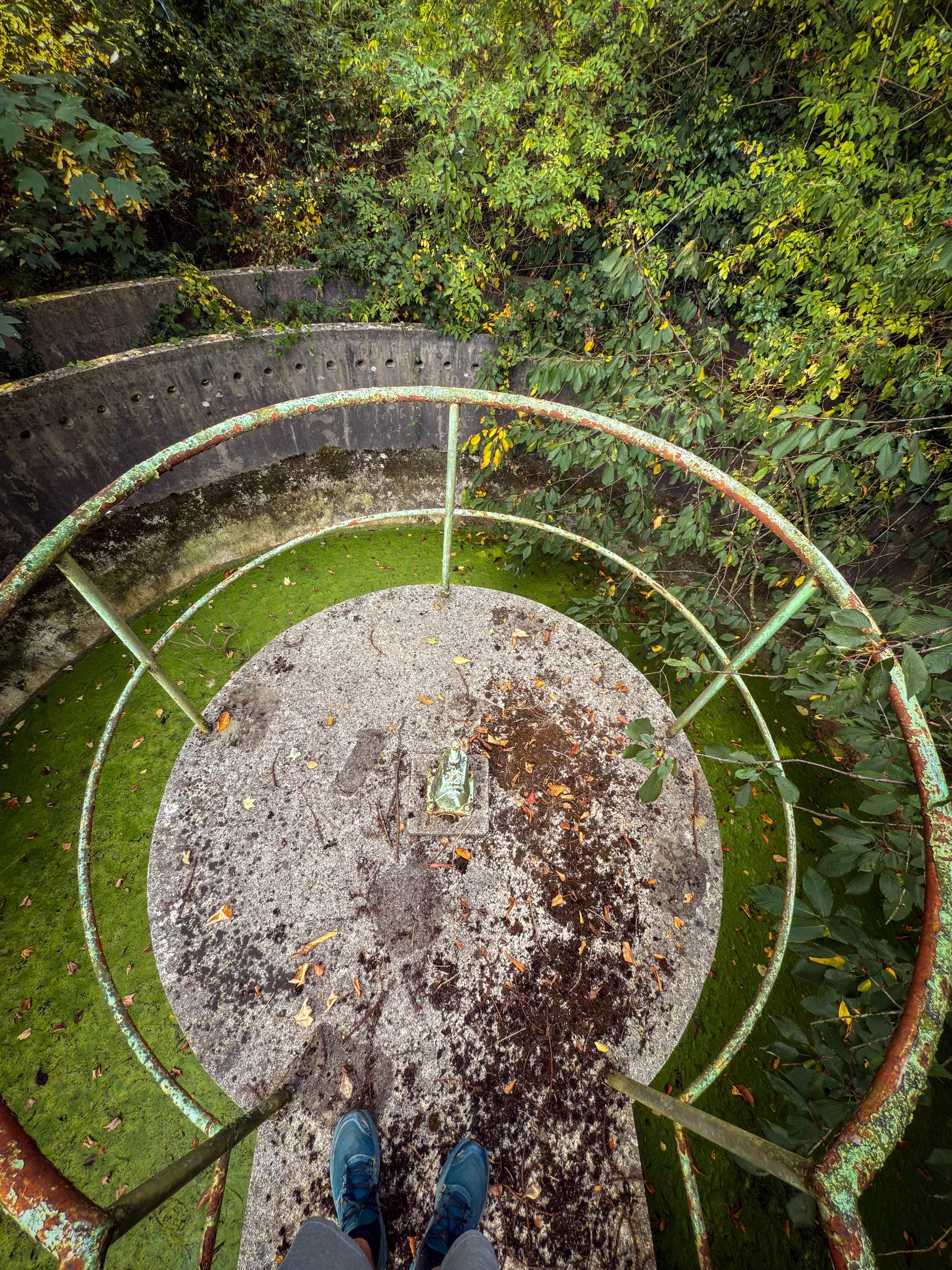
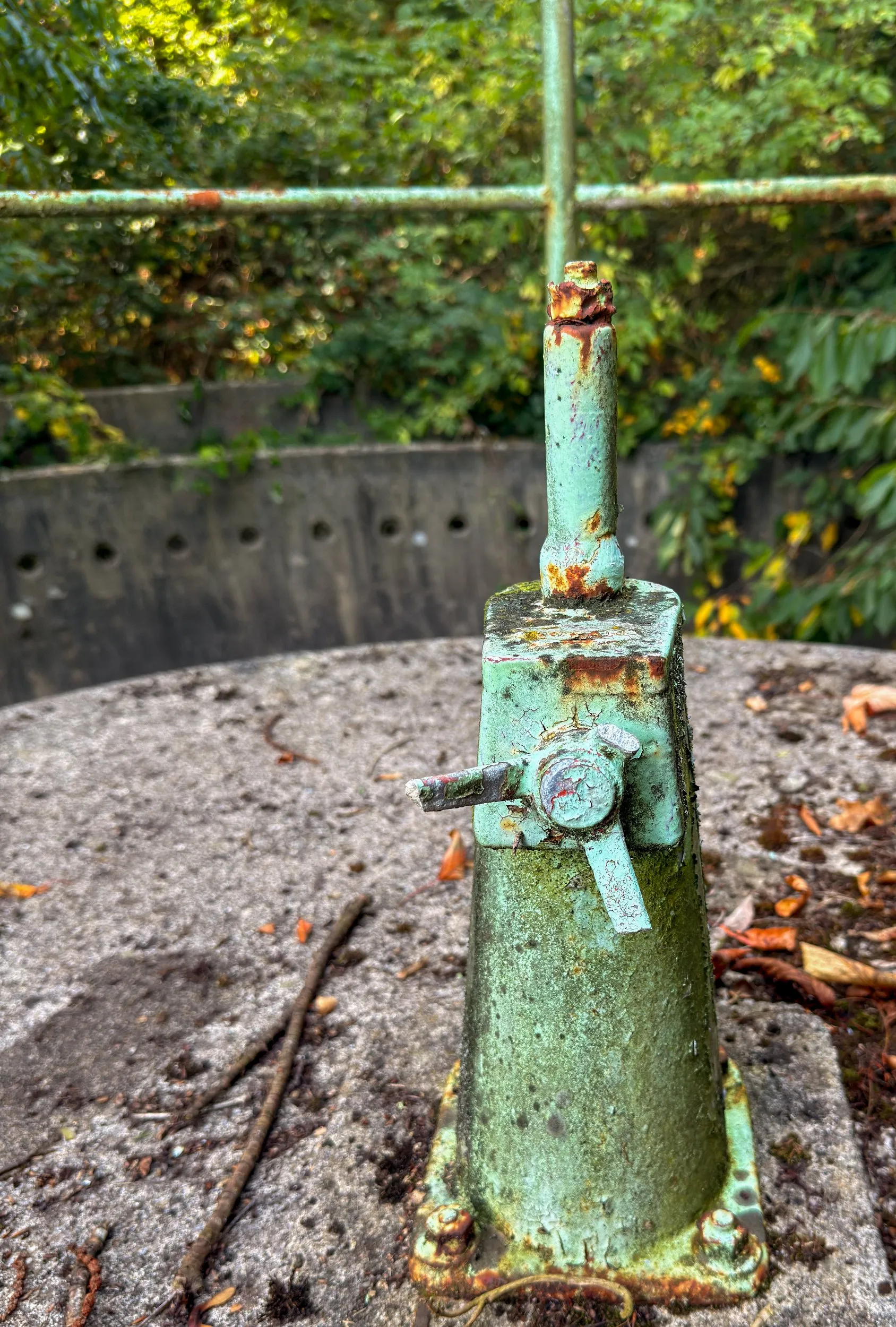
The largest tanks are sedimentation clarifiers. The cone shape aids sludge removal and drainage: heavier particles settle to the bottom while treated water overflows from the small outlets pictured in the background of the second and third photos.
First Floor
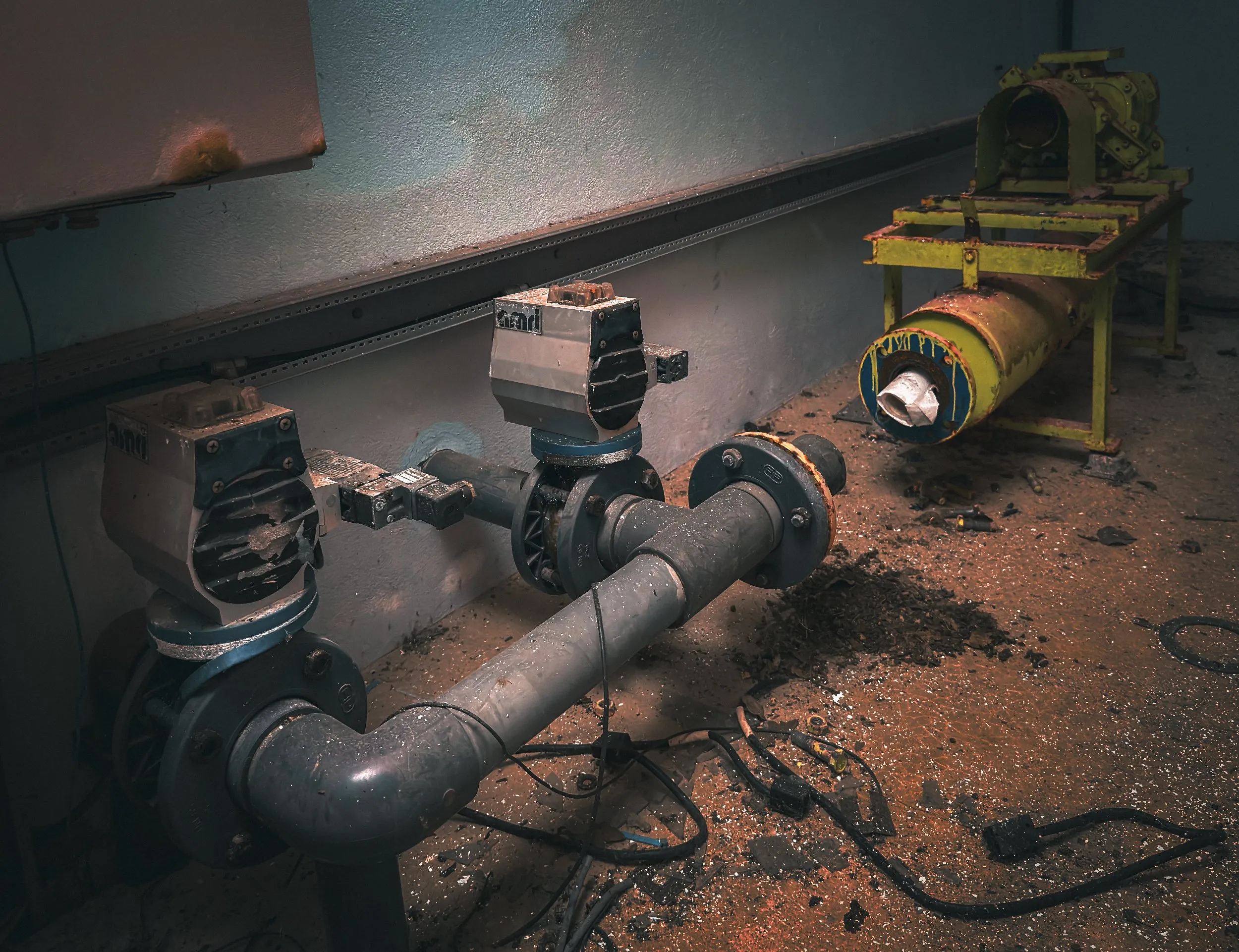
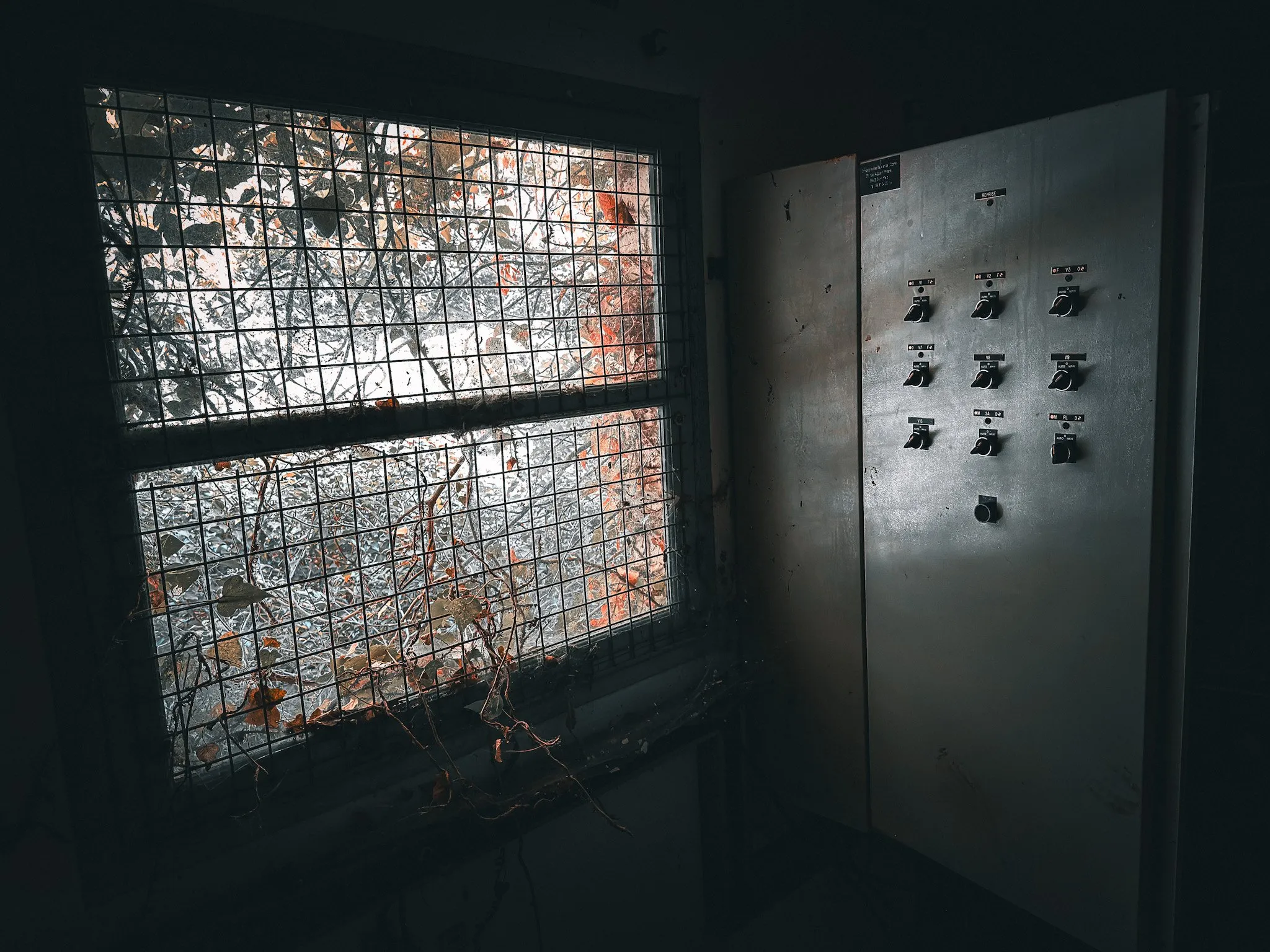
Probably the least interesting level — mainly one room with switchboards, valves and a small motor. The exact function of some valves and the motor is unclear.
Ground Floor
The ground floor is the most interesting area. It contains remnants of the main pumping equipment, a small laboratory and a chemical dosing system.
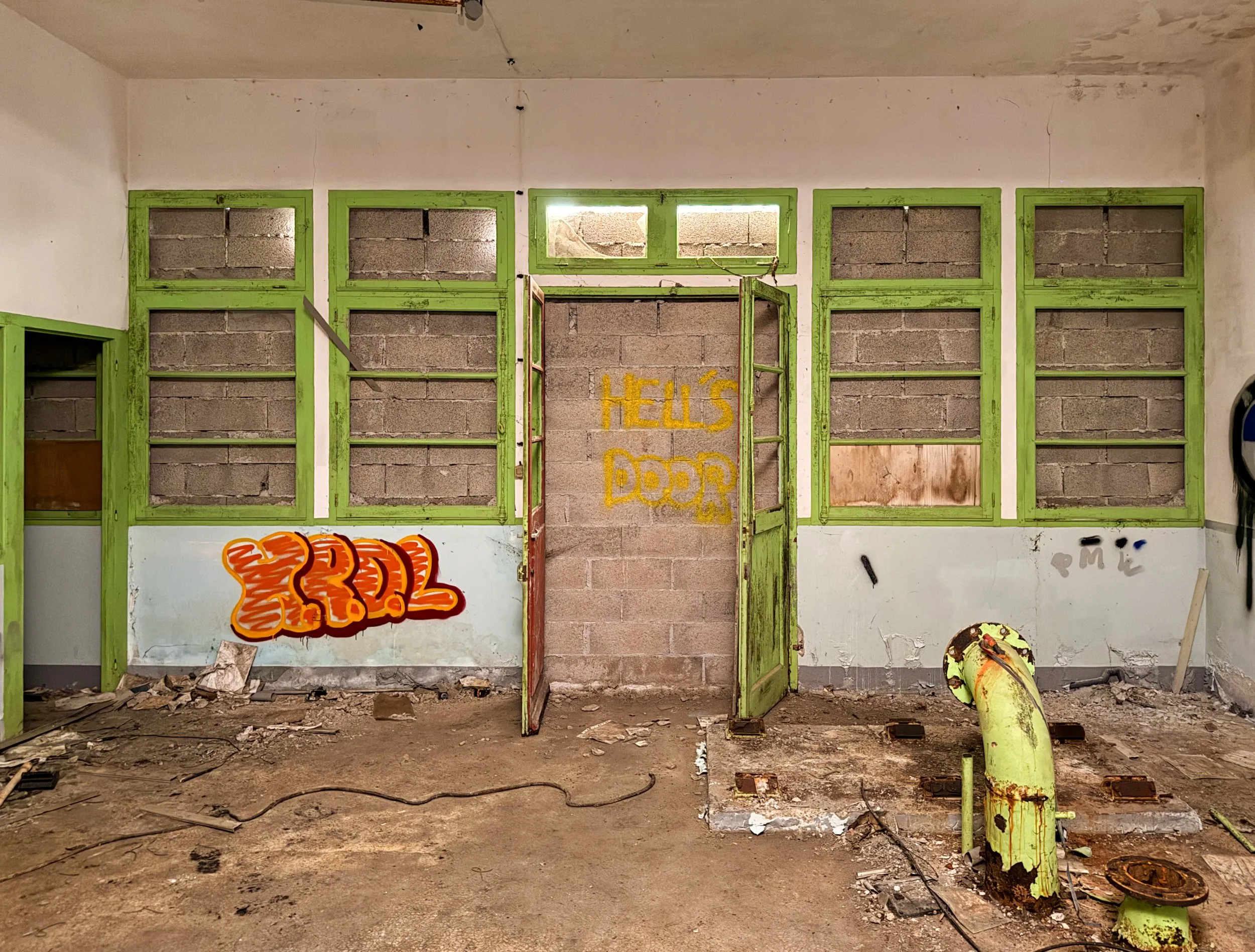
The now-sealed main entrance. Inside it’s clear the pumping station was designed to blend with local architecture — homely wooden windows and panelling were used to minimise visual disruption.
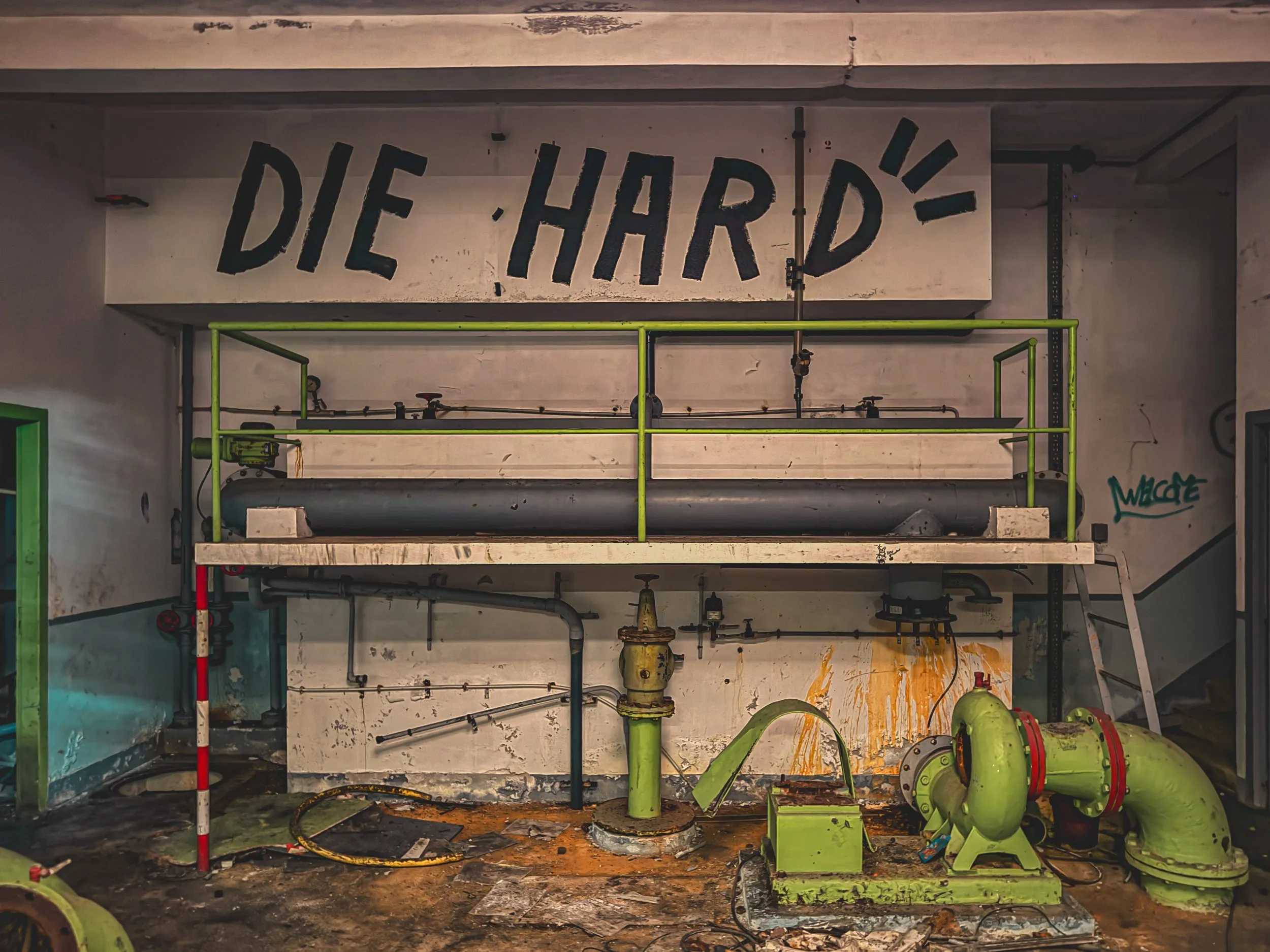
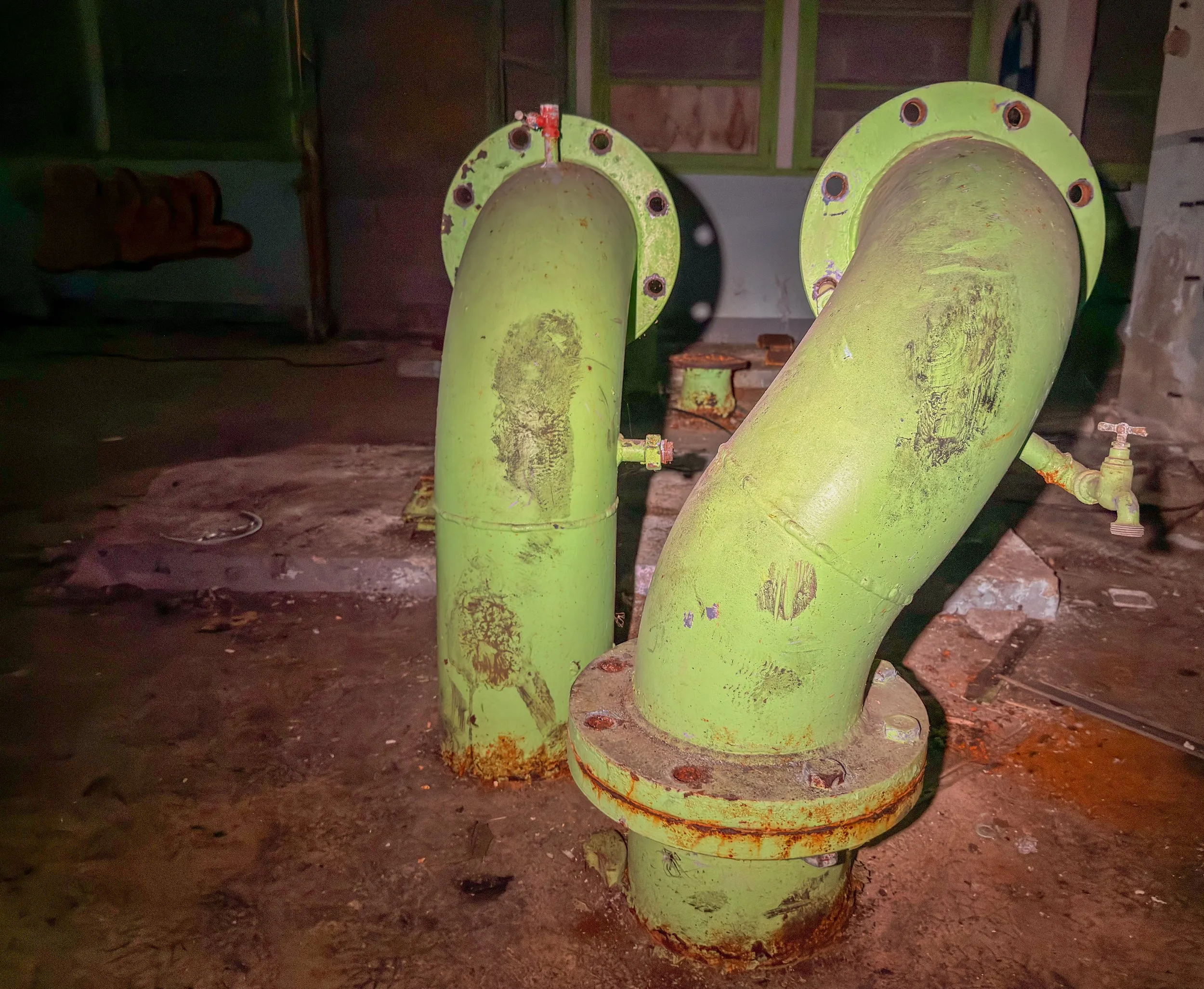
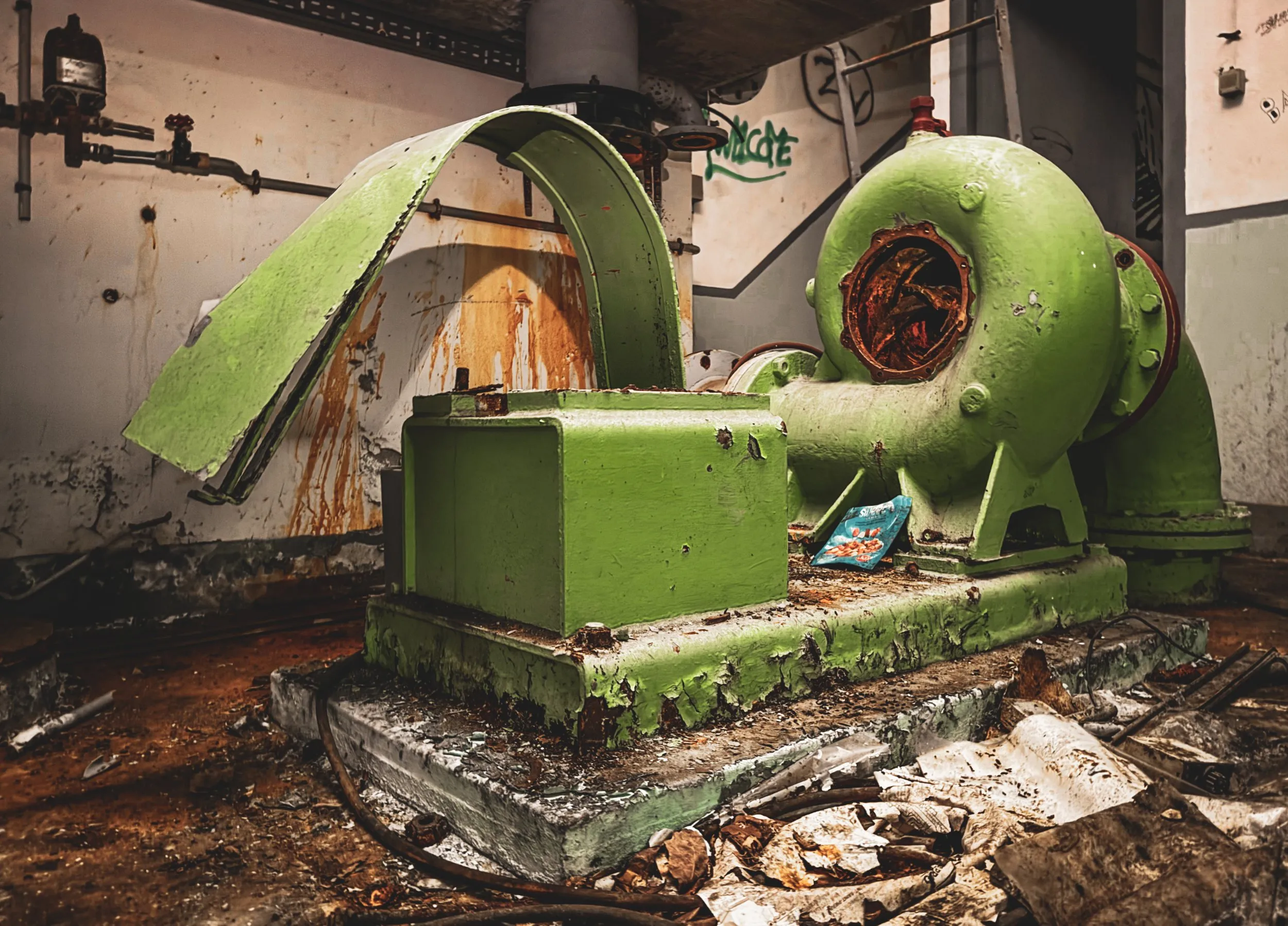
Much of the original pumping infrastructure remains. Two inlet pipes run from the wet well and have small taps allowing operators to sample raw water to determine treatment needs and assess reservoir health. The spiral pipe is part of a centrifugal pump that would have generated pressure to move water through the facility.
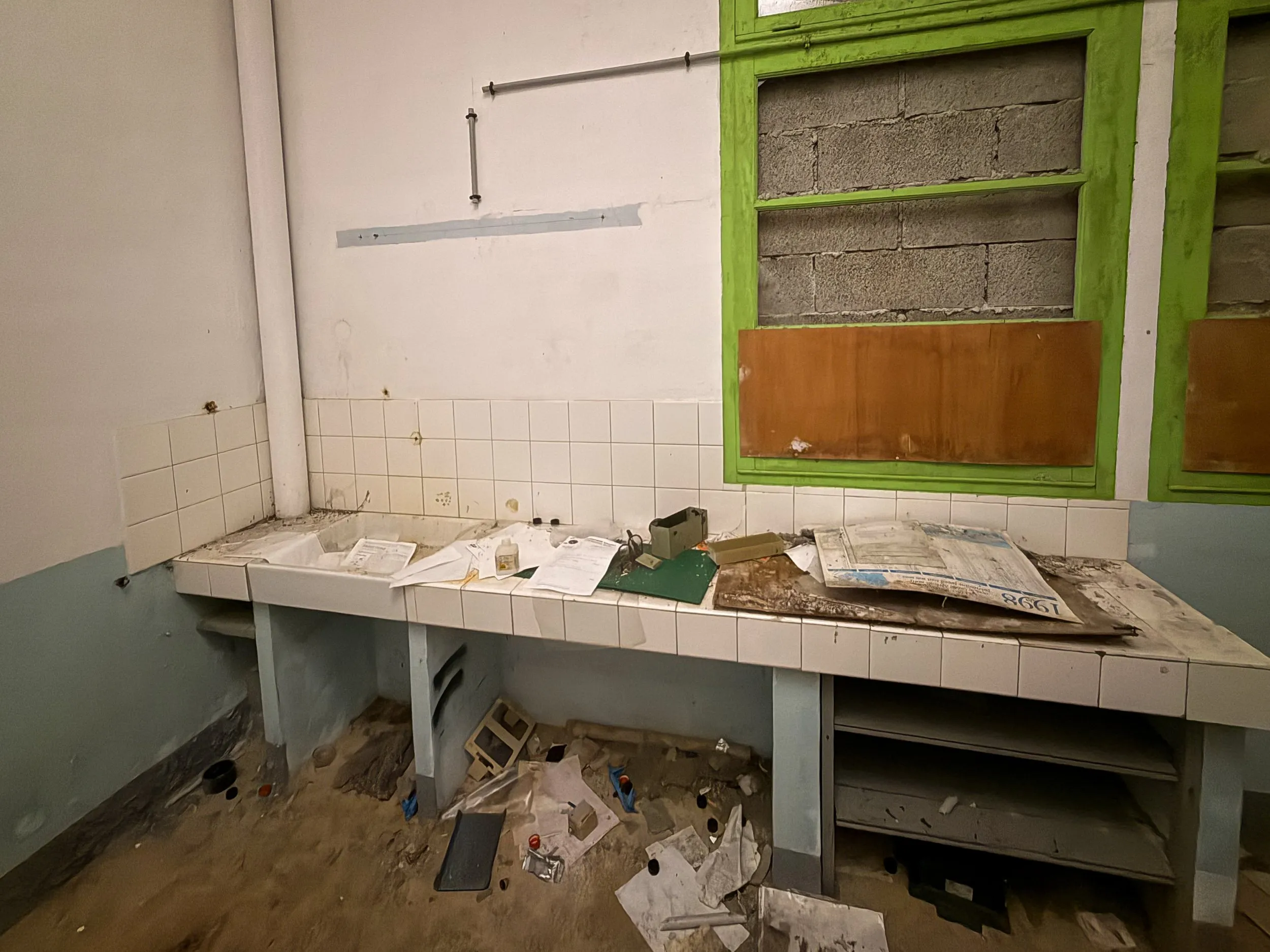
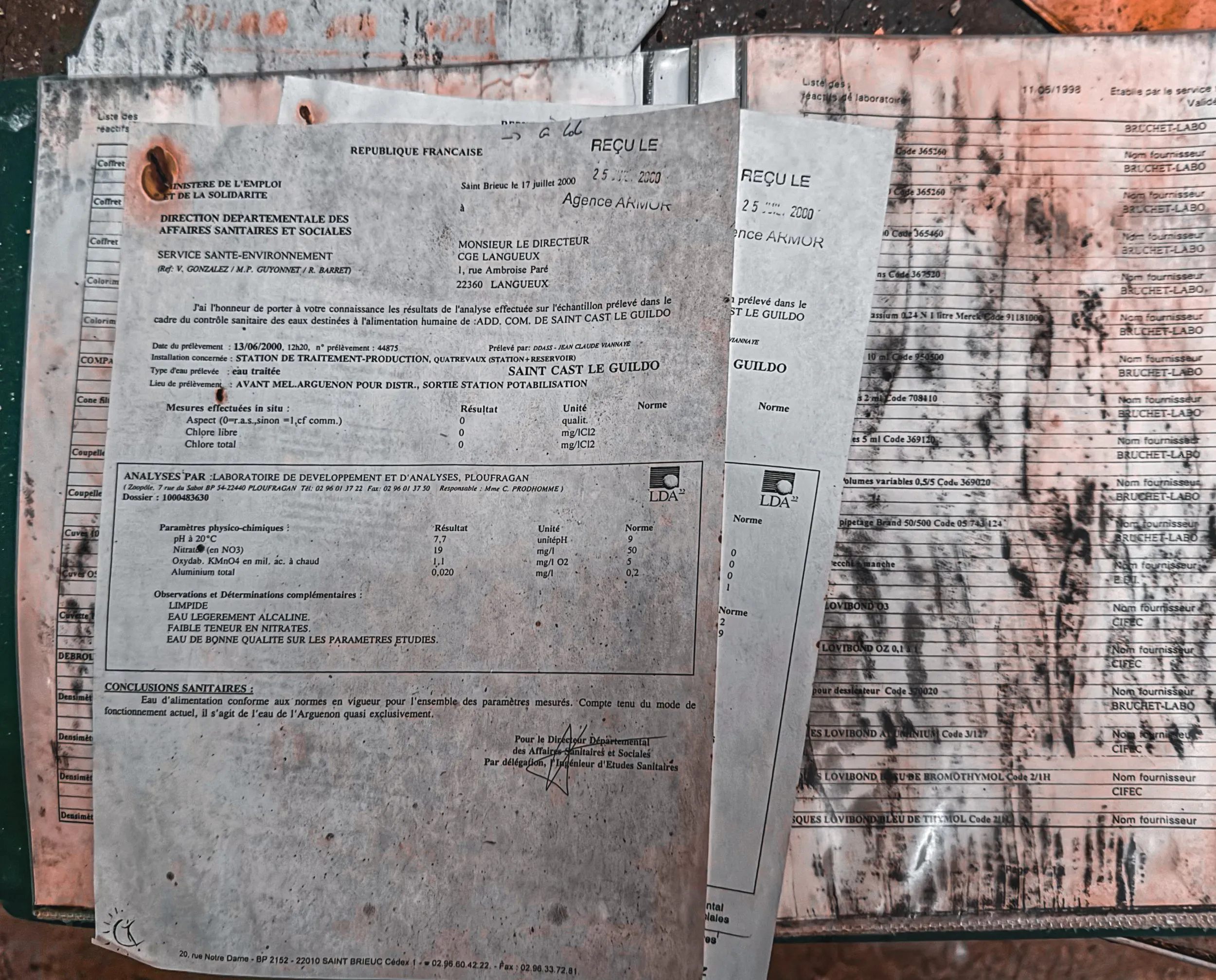
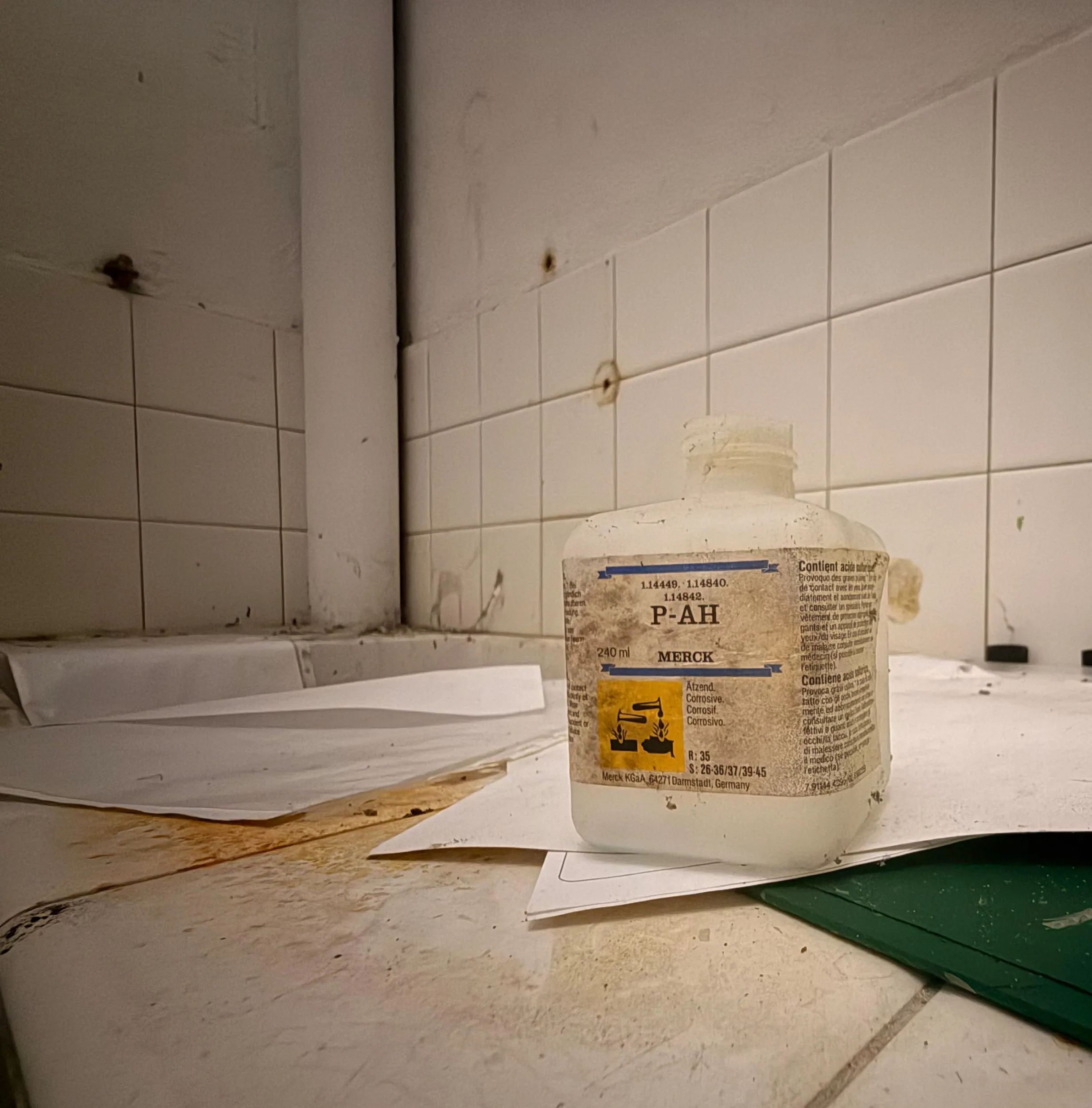
The facility also housed a small laboratory where operators tested water samples to ensure potability. Left behind is a small bottle of pH indicator solution. One of the recordings (centre image) shows zero chlorine and a pH of 7.7.
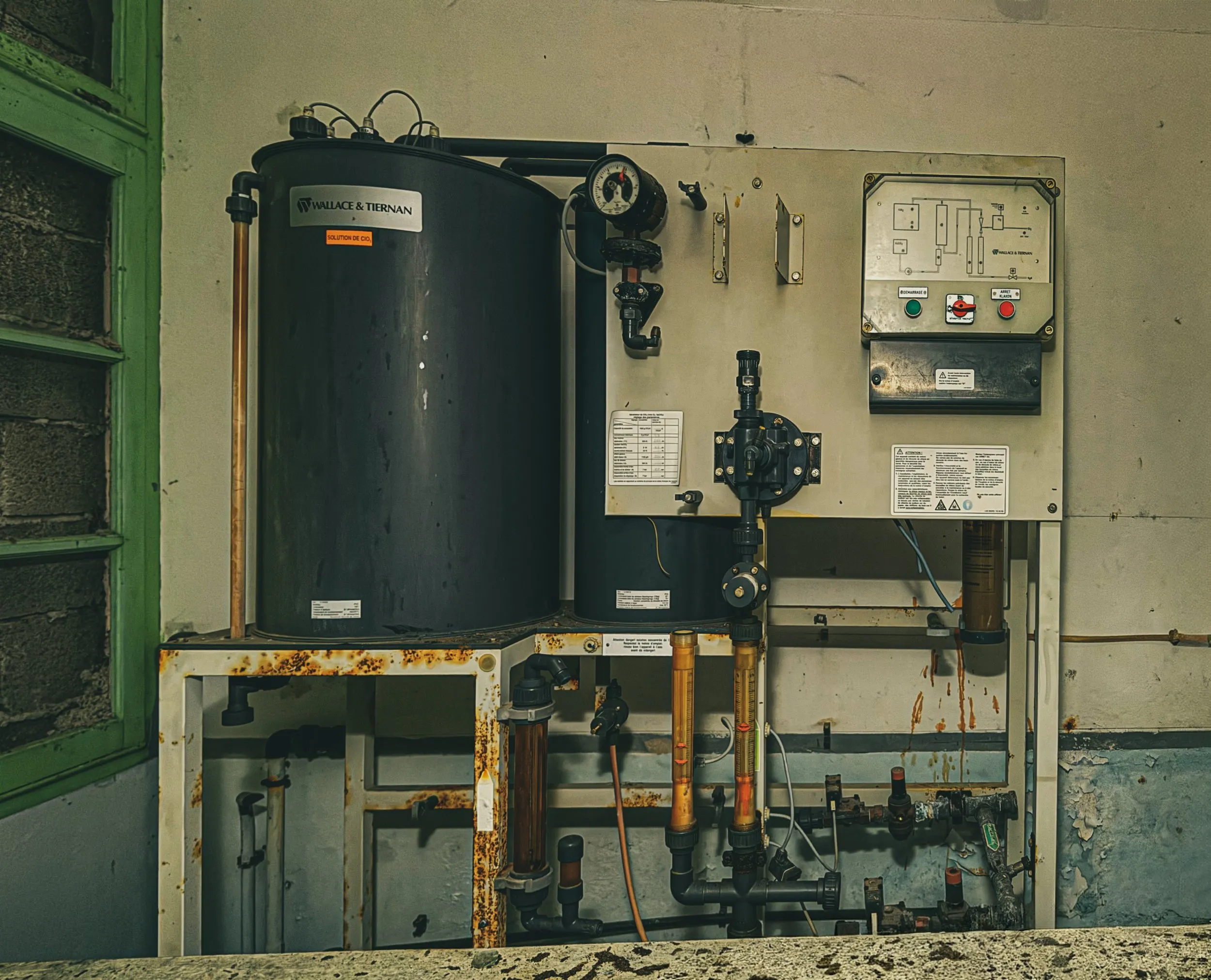
This is a Wallace & Tiernan chlorinator system. It injects chlorine to disinfect water and would have formed part of an automated dosing system, using sensors to adjust the chlorine dose in real time based on flow.
Continued below…